
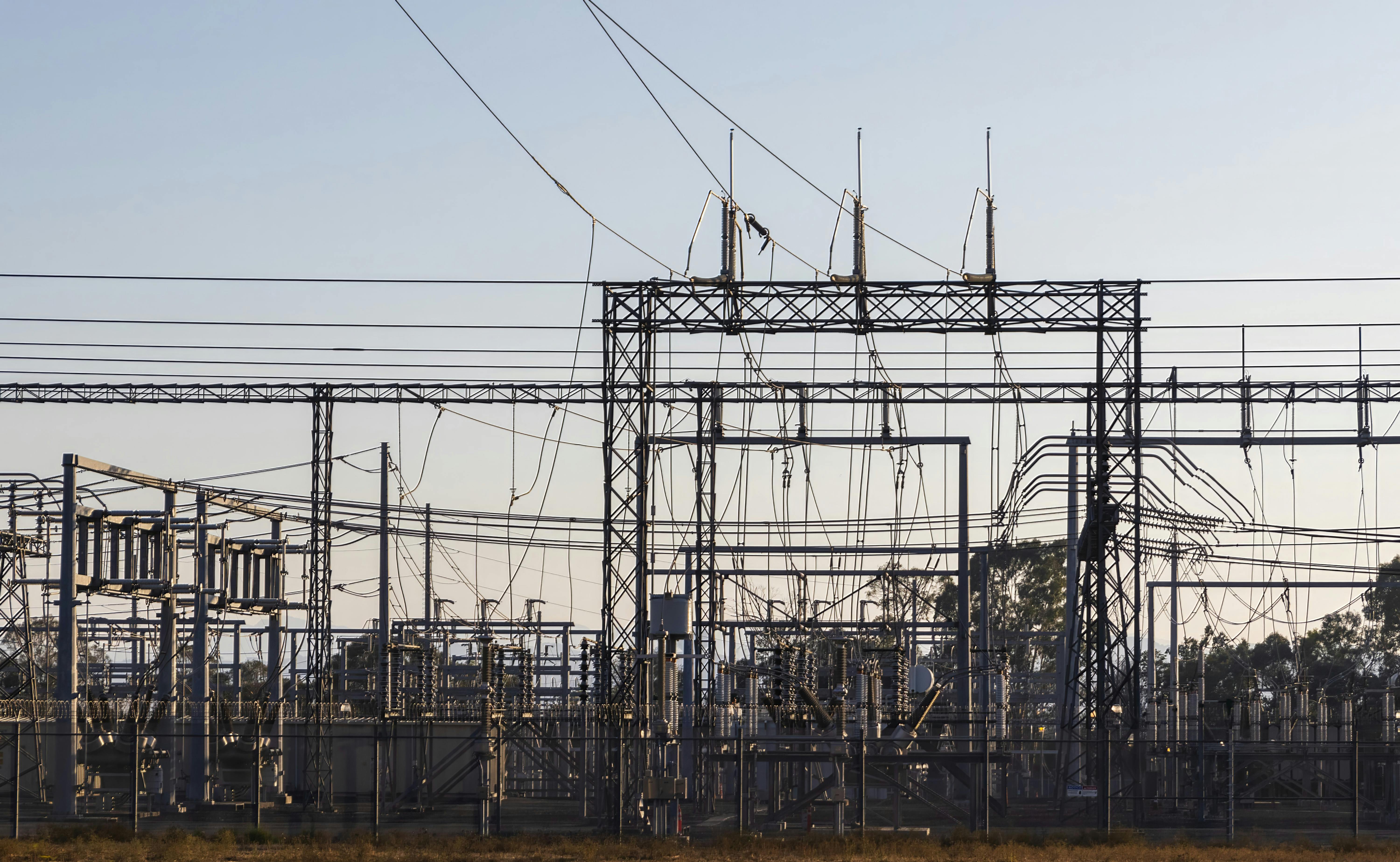
The era of easy gains through raw compute scaling is ending. Despite Wall Street projecting hyperscaler capital expenditure to hit $527 billion in 2026, the brute-force approach to artificial intelligence is colliding with physical, structural, and thermodynamic realities. While public discourse focuses on safety and regulation, the actual bottlenecks are more mundane and far harder to solve: power generation, grid capacity, and the exhaustion of high-quality human data.
Practitioners who have spent the last three years waiting for the next model to solve their implementation problems are finding that next-gen releases are no longer reliably outperforming their predecessors. We are transitioning from a period of explosive growth to one of disciplined optimization. If you are building AI-native systems today, you must account for these constraints or risk building on a foundation that is no longer moving forward.
Key Takeaways
- Physical Bottlenecks: AI progress is limited by thermodynamics (power and heat) and grid capacity, not just capital.
- Data Exhaustion: Upscaling datasets has hit a wall; feeding AI-generated content back into models leads to model collapse.
- Structural Trade-offs: General-purpose AI faces the "Swiss Army knife" problem where multi-objective balancing limits peak performance.
- Operational Shift: Success now requires slowing down release cycles to implement rigorous guardrails and human-in-the-loop simulation.
The Thermodynamic Ceiling and Hardware Limits
The assumption that infinite capital can dissolve any technical obstacle is proving incorrect. Major tech firms invested over $400 billion in AI initiatives in 2025, yet the returns are hitting a physical wall. The core issue is thermodynamic. High-performance compute clusters require massive power generation and advanced cooling infrastructure that the current energy grid cannot support at the required scale.
Beyond power, the supply chain for the hardware required to sustain these clusters is operating at its limit. This isn't just a chip shortage; it is a structural bottleneck involving every component from transformers in the power grid to the physical real estate of data centers. While Demis Hassabis and others argue that scaling laws still have room to run, they acknowledge that significant breakthroughs in efficiency—not just more of the same—are now the prerequisite for progress.
The Data Wall: Model Collapse and Synthetic Decay
For years, the recipe for better AI was simple: more data, more parameters. That era is over because we have run out of unused, high-quality human-generated data. Developers are now facing two distinct data problems:
- Exhaustion: Every digitized scrap of human knowledge has already been ingested by the current frontier models.
- Pollution: As the web becomes saturated with AI-generated content, models are increasingly trained on their own previous outputs.
This creates a feedback loop known as model collapse. When an LLM is fed AI-generated content, its output quality degrades, eventually leading to unintelligible or highly repetitive results. The industry is finding that synthetic data is not a perfect substitute for the nuance and variety of human thought.
The Swiss Army Knife Paradox
Systems science suggests a fundamental limit to general-purpose intelligence. In engineering, a tool designed to do everything (the Swiss Army knife) will always be outperformed by a specialized tool in a specific task. AI models face similar trade-offs between multiple objectives—reasoning, creativity, safety, and speed.
As models grow larger to accommodate more tasks, the overhead of balancing these competing objectives increases latency and reduces the reliability of any single task. True superintelligence remains elusive because a system cannot optimize for every variable simultaneously without hitting a complexity ceiling.
The Economic Reality of 2026
We are witnessing the potential for a "Third AI Winter." This isn't a prediction of AI disappearing, but a realization that the ROI for massive LLMs is stagnating.
| Metric | 2025 Reality | 2026 Projection |
|---|---|---|
| Hyperscaler Cap-Ex | $400B+ | $527B |
| Data Availability | High (Human-centric) | Low (Synthetic-heavy) |
| Primary Bottleneck | H100 Availability | Power & Grid Capacity |
| Dev Focus | Rapid Prototyping | Discipline & Guardrails |
When funding declines because the technology fails to meet the hyper-inflated expectations of the market, advancement slows. Businesses are beginning to shift their focus from "What can the next model do?" to "How can we make the current models actually work in production?"
Practical Strategy: Slowing Down to Move Faster
If the underlying models are no longer improving at an exponential rate, your competitive advantage must come from engineering discipline rather than model selection. Successful teams are slowing down their release schedules to add necessary rigor.
1. Implement Simulation Layers
Instead of trusting raw model output, build simulation environments where the AI's decisions are tested against known constraints before hitting production. This reduces the "false confidence" often exhibited by late-stage LLMs.
2. Move from RAG to Agentic Reasoning
Since the models aren't getting smarter at the same rate, the focus must shift to how you chain them. Use specialized agents with narrow scopes rather than one giant prompt. This bypasses the Swiss Army knife problem by using smaller, more efficient models for discrete tasks.
3. Invest in Human-in-the-loop (HITL)
As model quality hits a plateau, human oversight becomes the primary way to differentiate your service quality. Build interfaces that allow experts to verify and correct AI outputs, creating a proprietary data loop that avoids the model collapse of public datasets.
4. Optimize for Latency over Parameters
In a resource-constrained environment, a 7B parameter model tuned perfectly for your specific use case will outperform a 400B parameter frontier model that is bogged down by safety alignment and general-purpose overhead.
Frequently Asked Questions
Are we entering a new AI Winter?
Will synthetic data solve the data exhaustion problem?
What is the 'Swiss Army knife' problem in AI?
How should technical leads justify AI spend in 2026?
If you are navigating these bottlenecks and need to transition from experimental wrappers to production-grade automation that respects these physical constraints, AImatic can help. We specialize in building the guardrails and specialized architectures required for the next phase of AI deployment. Reach out at hello@aimatic.dev.